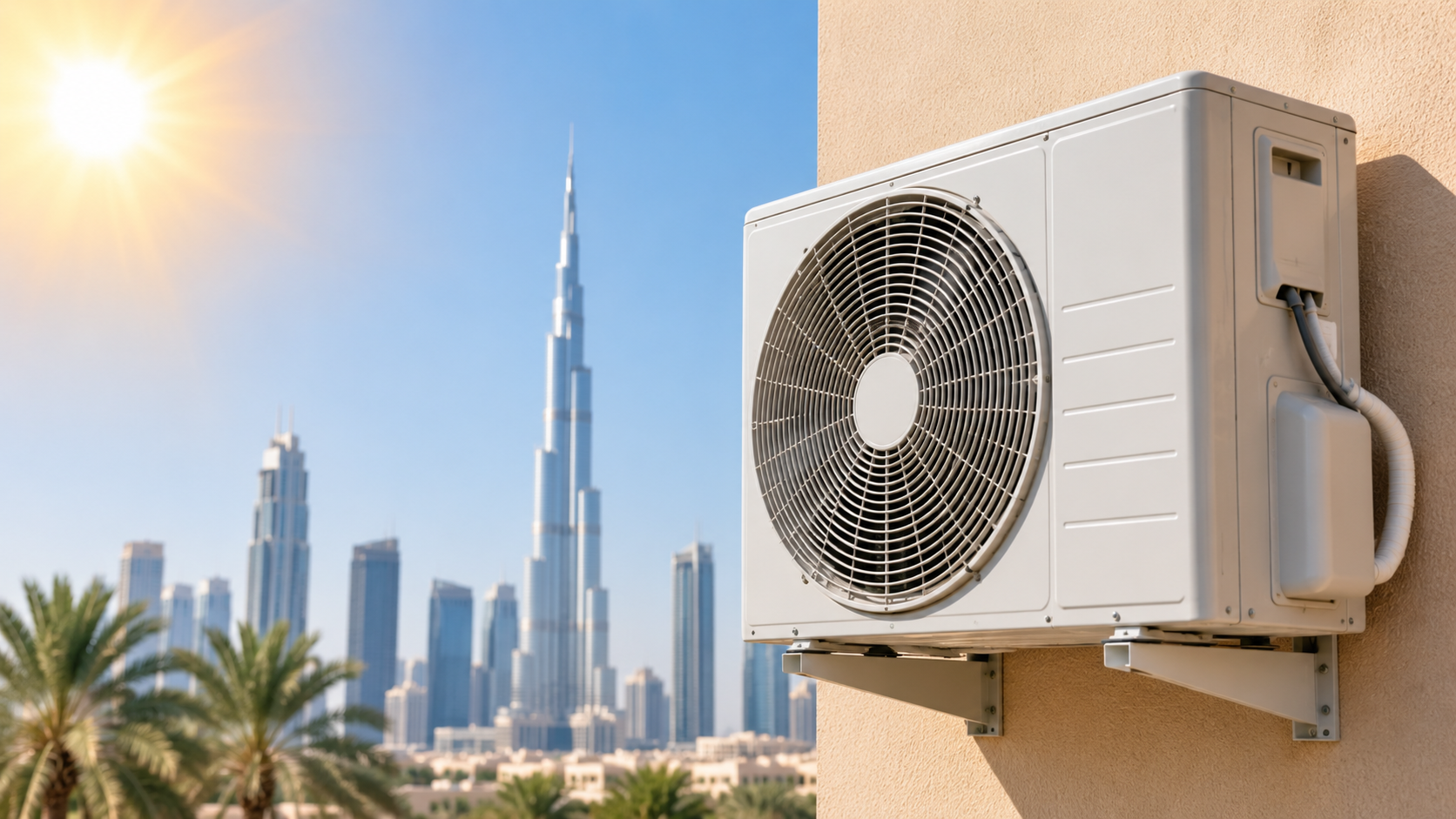
Imagine stepping outside in Dubai during summer. The temperature is extremely high, the sunlight feels intense, and the outdoor air can be uncomfortable. However, when you enter a shopping mall, classroom, or home, you immediately experience cool and comfortable air.
Have you ever wondered how air conditioners manage to keep indoor spaces cool when outdoor temperatures are so high?
The answer lies in science, particularly physics, heat transfer, and thermodynamics. Air conditioners use a special cooling process to remove heat from indoor spaces and release it outside.
Let's explore how this technology works and discover the science behind everyday cooling in the United Arab Emirates.
Why Does the UAE Need Powerful Air Conditioning?
The UAE experiences extremely hot summers, with temperatures frequently reaching very high levels. Cities such as Dubai, Abu Dhabi, Sharjah, and Al Ain experience challenging weather conditions that increase the demand for cooling.
Air conditioning is essential in homes, schools, hospitals, offices, shopping centres, and other public spaces.
However, cooling buildings in such conditions requires more than simply blowing cold air. Air conditioners must continuously remove indoor heat while dealing with the hot outdoor environment.
Coastal locations also experience high humidity, which makes cooling more challenging. Modern air conditioning systems therefore help control both temperature and moisture levels.
How Do Air Conditioners Actually Work?
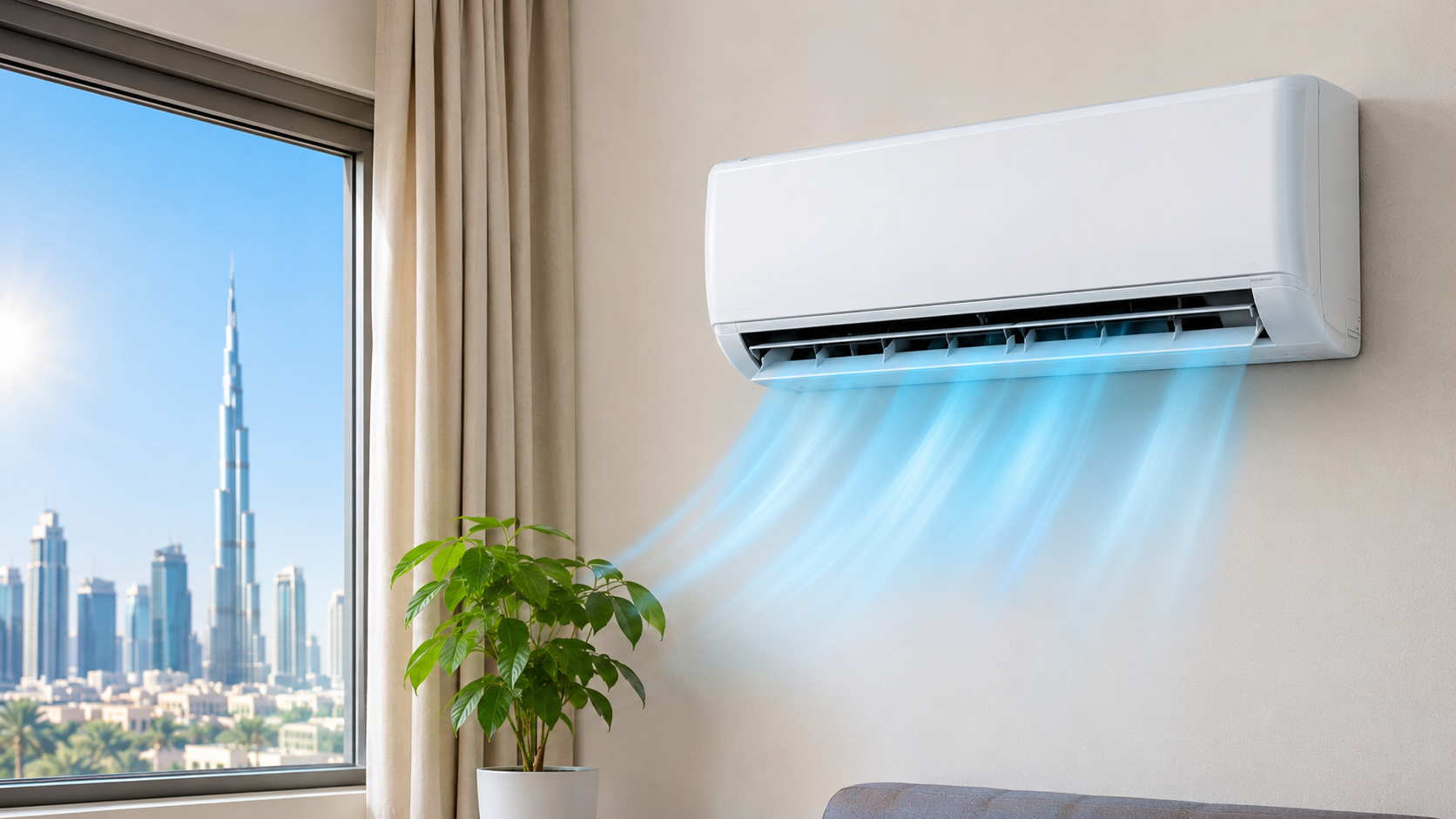
One interesting fact is that air conditioners do not actually create cold air. Instead, they remove heat from indoor air and transfer it outside.
This process works through a refrigeration cycle involving a special fluid called refrigerant.
The refrigerant continuously changes between liquid and gas states, allowing it to absorb and release heat.
Most conventional air conditioning systems use four important components to complete this process.
1. Evaporator: Absorbing Indoor Heat
The evaporator is located inside the air conditioning unit.
When warm air from a room passes over the cold evaporator coil, the refrigerant inside absorbs heat from that air.
As the refrigerant absorbs energy, it changes from a liquid into a gas.
A fan then circulates the cooled air back into the room.
The evaporator also helps remove moisture from the indoor air, making the environment feel more comfortable.
2. Compressor: Increasing Pressure and Temperature
After absorbing heat, the refrigerant travels to the compressor.
The compressor increases the refrigerant's pressure, which also raises its temperature.
This creates hot, high-pressure refrigerant gas that can release its heat when it reaches the outdoor unit.
The compressor is one of the most important parts of an air conditioner because it keeps the refrigeration cycle running.
3. Condenser: Releasing Heat Outside
The condenser is generally located in the outdoor unit.
Its main purpose is to release the heat collected from inside the building.
The hot refrigerant gas passes through condenser coils, where a fan helps move outdoor air across the coils.
As heat escapes, the refrigerant changes back into a liquid.
This is why outdoor AC units release hot air even when the indoor space is becoming cooler.
4. Expansion Valve: Preparing for Another Cooling Cycle
Before returning to the evaporator, the liquid refrigerant passes through an expansion valve.
This component reduces the refrigerant's pressure and temperature.
The colder refrigerant then enters the evaporator, where it can absorb heat from indoor air again.
The entire process repeats continuously to maintain the desired indoor temperature.
Why Is Air Conditioning More Challenging in UAE Summers?
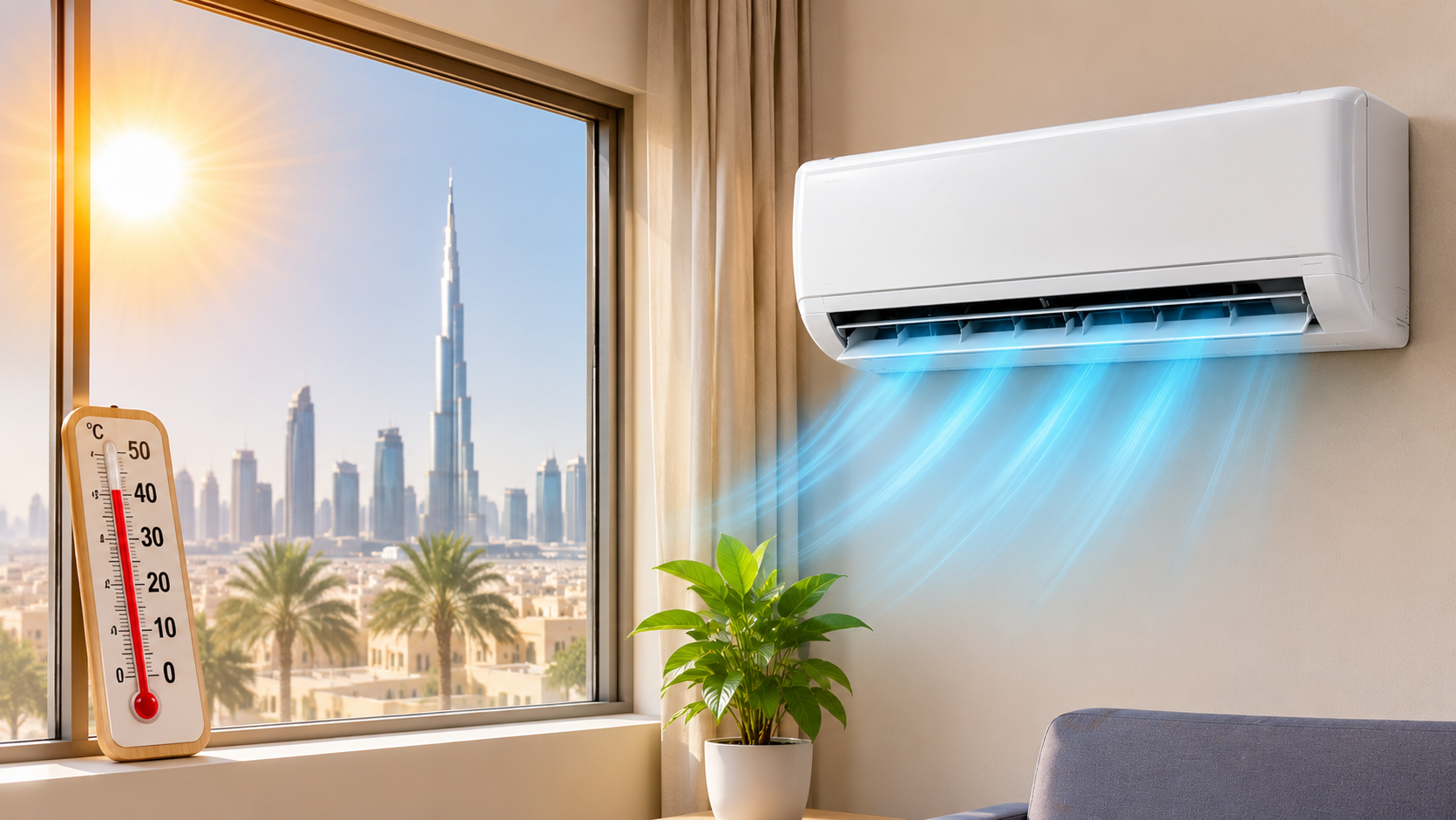
Air conditioners work against the temperature difference between indoor and outdoor environments.
When outdoor temperatures increase, the condenser has to release heat into an already hot environment. This can make heat rejection more difficult and reduce the cooling capacity and efficiency of some systems.
Other factors also affect AC performance:
High humidity: Air conditioners must remove additional moisture from the air.
Direct sunlight: Sunlight increases heat entering buildings through windows and roofs.
Poor insulation: Heat can enter through walls, windows, and ceilings.
Dirty filters: Dust can restrict airflow and affect cooling performance.
Incorrect system size: An unsuitable AC capacity may struggle to maintain comfortable temperatures.
These factors explain why proper AC maintenance, suitable insulation, and efficient cooling technology are important in the UAE.
What Can Students Learn from Air Conditioning?
Air conditioning is an excellent real-life example of how science influences everyday life.
Students can understand several important academic concepts by studying how cooling systems operate.
Physics: Students can explore heat transfer, temperature, pressure, and energy conversion.
Chemistry: Refrigerants demonstrate how substances change between liquid and gaseous states.
Mathematics: Temperature differences, energy consumption, and cooling efficiency involve mathematical calculations.
Environmental Science: Students can learn about electricity consumption, energy efficiency, and the environmental impact of cooling technologies.
Connecting classroom lessons with everyday technology makes complicated scientific concepts easier to understand.
Learn Science Through Real-Life Examples with Siri Education
Understanding scientific concepts becomes easier when students can connect them with things they experience every day.
At Siri Education, students receive live, one-on-one online tutoring designed to make learning engaging and understandable.
Our tutoring programmes cover subjects including Physics, Chemistry, Mathematics, Biology, and Calculus for students in Grades 6–12.
Whether students want to understand heat transfer, explore thermodynamics, or improve their problem-solving skills, personalised learning can help them develop a stronger understanding of academic concepts.
If you are looking for Online Tutoring in United Arab Emirates, Siri Education offers an opportunity to learn through interactive lessons and individual academic support.
Final Thoughts
Air conditioners are more than just machines that provide comfort during hot summers. They are practical examples of physics, chemistry, and engineering working together.
From absorbing indoor heat to releasing it outside, every stage of the refrigeration cycle demonstrates how scientific principles solve real-world problems.
The next time you enter a cool classroom or shopping mall in the UAE, remember that an interesting scientific process is happening behind the scenes!