The United Arab Emirates is surrounded by the Arabian Gulf and the Gulf of Oman, yet it receives very little rainfall throughout the year. With a hot desert climate and limited natural freshwater resources, providing clean drinking water to millions of people is a major challenge.
So, where does the UAE get so much fresh water?
One of the most important answers is desalination. This fascinating technology transforms salty seawater into freshwater that can be treated and supplied to homes, schools, hospitals, and businesses.
But how does this process actually work? The answer involves Chemistry, Physics, and advanced engineering.
Let's explore how the UAE turns seawater into drinking water and discover the science behind this important technology.
Why Does the UAE Need Seawater Desalination?
Freshwater is essential for drinking, cooking, cleaning, agriculture, and industrial activities. However, the UAE has limited natural freshwater resources because of its dry desert climate and low rainfall.
Groundwater is available in some areas, but excessive use can reduce underground water reserves and increase salinity.
To meet growing water demand, the UAE has invested heavily in desalination plants that process seawater on a large scale.
Desalination helps provide a more reliable source of freshwater and supports the country's growing population and economy.
What Is Desalination?
Desalination is the process of removing dissolved salts and other unwanted substances from seawater to produce freshwater.
Seawater contains different dissolved minerals and salts, including sodium chloride, which is commonly known as table salt.
Drinking seawater directly is unsafe because its high salt concentration can cause the body to lose more water.
Desalination uses specialised technology to separate water from these dissolved substances.
Two major technologies used in desalination are:
Reverse osmosis
Thermal desalination
Let's understand how each method works.
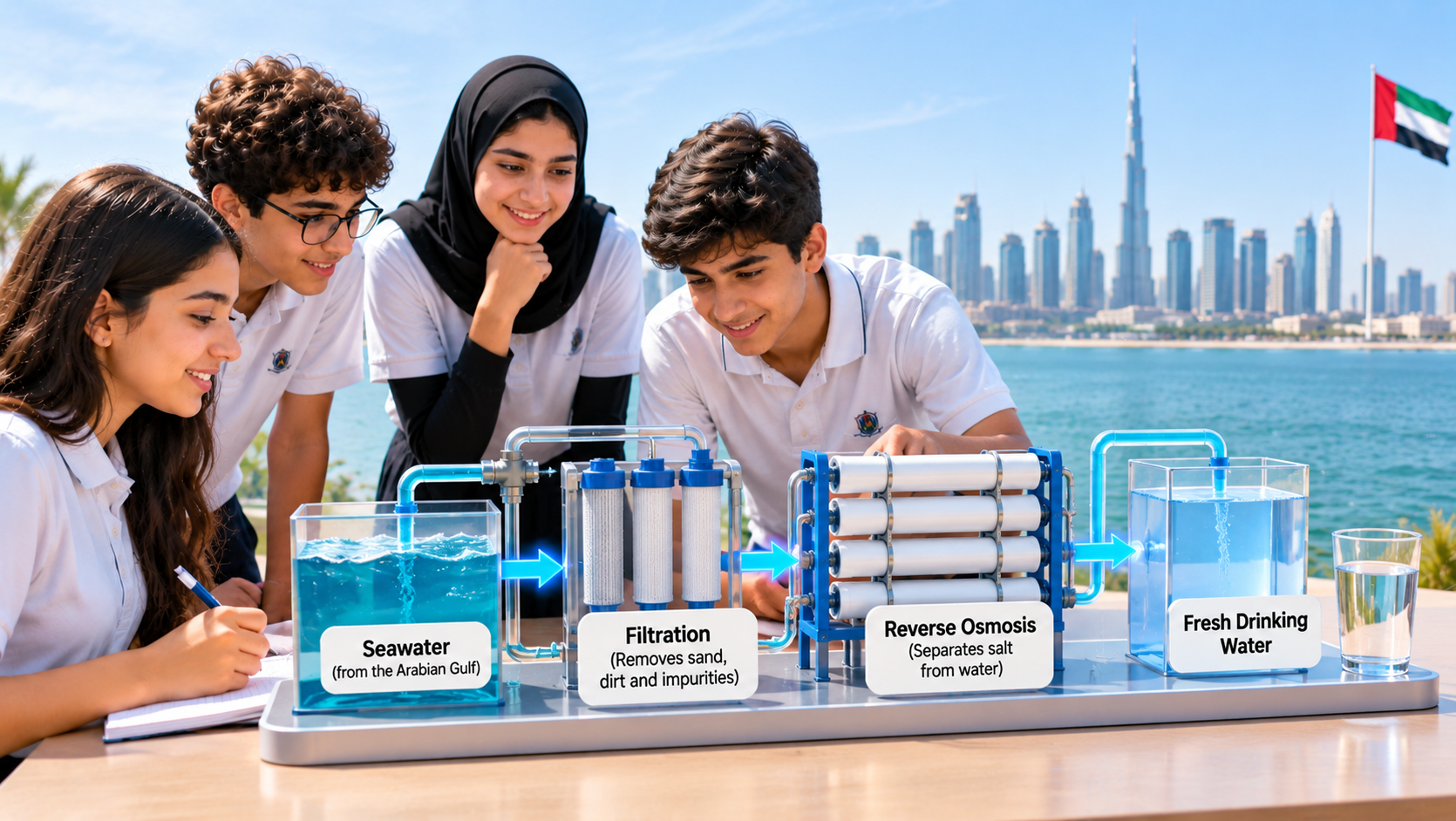
1. Reverse Osmosis: Separating Salt from Water
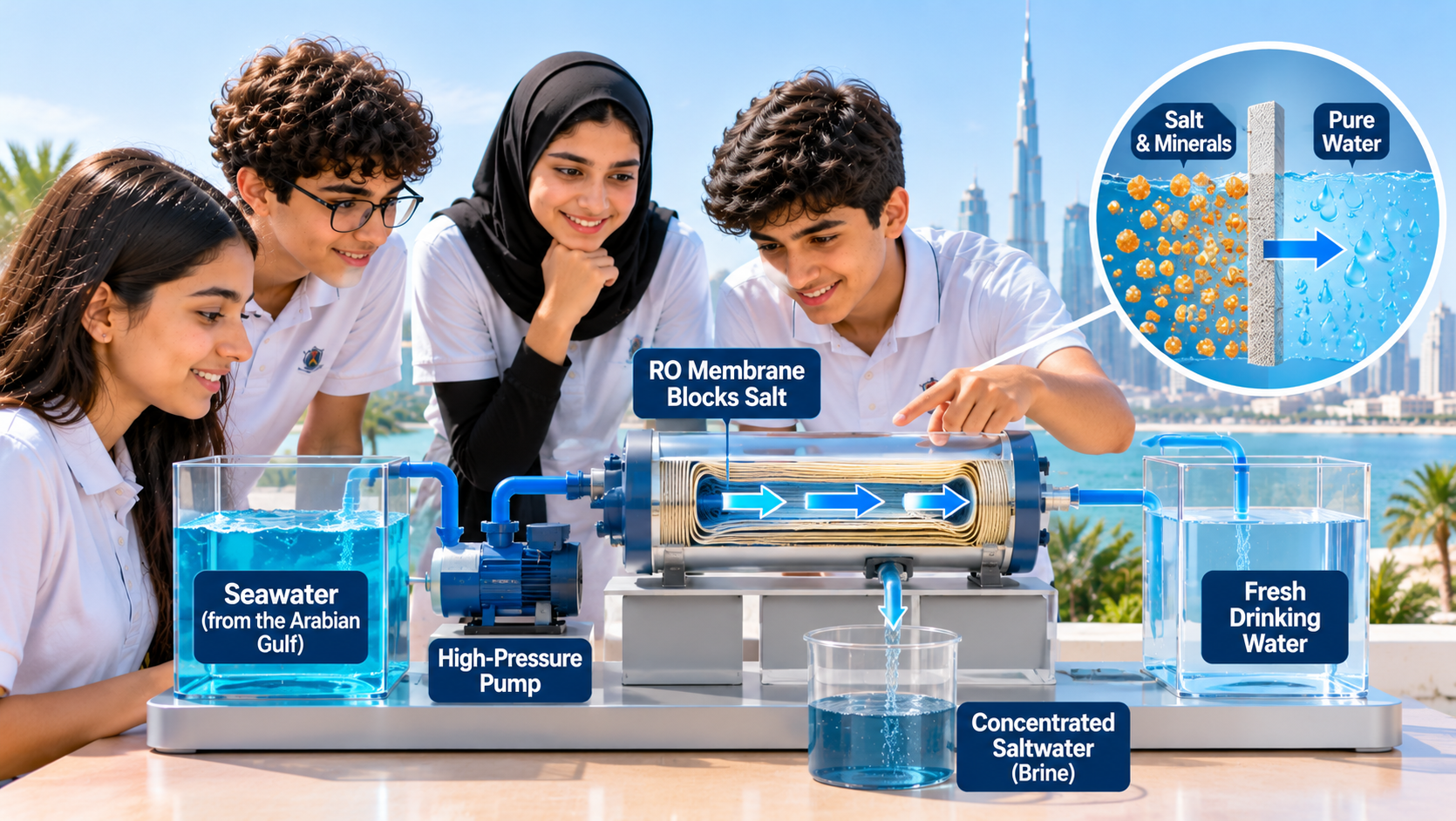
Reverse osmosis is one of the most important desalination technologies used in modern water treatment.
It works using a special membrane that allows water molecules to pass through while rejecting most dissolved salts and other impurities.
Here is how the process works:
Step 1: Seawater collection
Seawater is collected from the Gulf and transported to a desalination facility.
Step 2: Pre-treatment
Before entering the main system, seawater passes through filters that remove sand, dirt, algae, and suspended particles.
This protects the sensitive membrane equipment.
Step 3: Applying high pressure
Special pumps apply pressure to force seawater through a semi-permeable membrane.
The pressure must overcome the natural osmotic pressure of the seawater.
Step 4: Separating freshwater
Water molecules pass through the membrane, while most dissolved salts and other rejected substances remain behind.
The freshwater produced is called permeate, while the concentrated remaining water is known as brine.
Step 5: Final treatment
The freshwater receives additional treatment. Minerals may be added back to improve its quality, and disinfection helps ensure it meets drinking-water standards.
2. Thermal Desalination: Using Heat to Produce Freshwater
Another method used in the UAE is thermal desalination.
This technology uses heat to separate water from dissolved salts.
The process is similar to the natural water cycle, where sunlight causes seawater to evaporate and later form clouds.
In thermal desalination, seawater is heated until some of its water evaporates.
Salt and most other non-volatile substances remain behind.
The water vapour is then cooled and condensed into liquid freshwater.
Two established thermal technologies include Multi-Stage Flash (MSF) and Multi-Effect Distillation (MED).
These systems have been important in the development of large-scale desalination across the Gulf region.
3. How Is Desalinated Water Made Safe to Drink?
Removing salt is not the final step.
Freshwater must go through additional treatment before it can be safely supplied to consumers.
Some important steps include:
Mineral adjustment: Minerals are added to improve water stability and taste.
Disinfection: Treatment methods such as chlorination help control harmful microorganisms.
Quality testing: Water is tested to ensure it meets applicable drinking-water standards.
Storage and distribution: Treated water is stored and transported through pipelines to different communities.
These processes help ensure that desalinated water is suitable for everyday use.
4. What Happens to the Salt Removed from Seawater?
An interesting question is: where does all the removed salt go?
During desalination, the remaining concentrated seawater is called brine.
Brine contains a higher concentration of dissolved salts than the original seawater.
It is generally managed through controlled discharge systems, subject to environmental regulations and monitoring.
However, returning concentrated brine to the marine environment can affect local ecosystems if not managed properly.
This is why modern desalination projects focus on improving efficiency, reducing environmental impacts, and exploring better brine management technologies.
5. How Is the UAE Making Desalination More Sustainable?
Desalination requires energy, particularly when high-pressure pumps or thermal processes are involved.
The UAE is exploring more efficient technologies and cleaner energy sources to reduce the environmental impact of water production.
Important developments include:
More energy-efficient reverse osmosis membranes.
Renewable energy integration.
Advanced water treatment technologies.
Improved brine management.
Smart monitoring systems that reduce energy and water waste.
These innovations help make desalination more efficient while supporting long-term water security.
What Can Students Learn from Desalination?
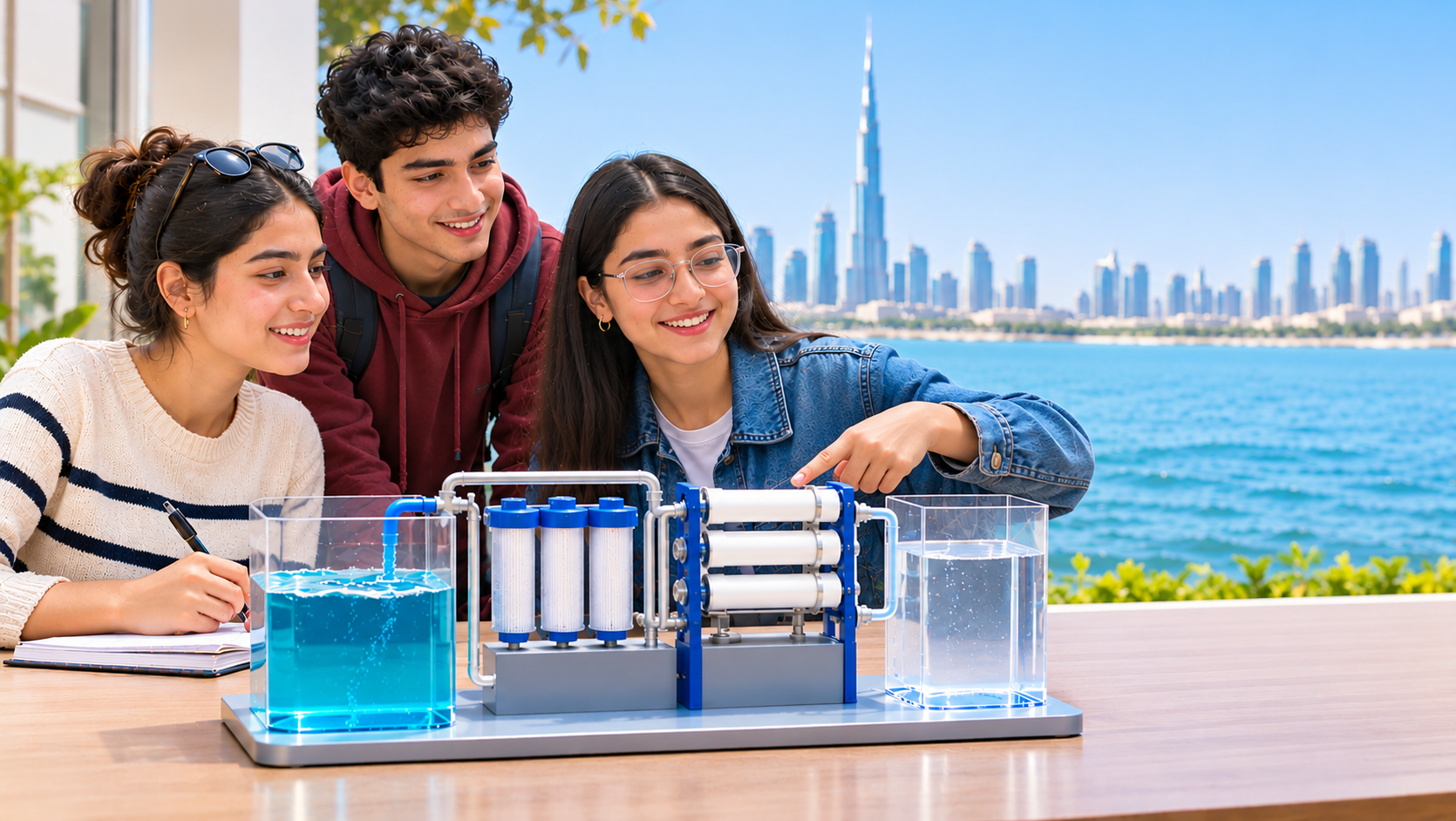
Desalination is an excellent real-world example of how scientific knowledge solves everyday challenges.
Students can connect this technology with several academic subjects:
Chemistry: Understand salt solutions, dissolved substances, and separation techniques.
Physics: Explore pressure, energy transfer, evaporation, and condensation.
Biology: Learn why freshwater is essential for living organisms and how water quality affects health.
Environmental Science: Study water conservation, marine ecosystems, and sustainable resource management.
Mathematics: Calculate water consumption, energy requirements, and desalination efficiency.
Learning these concepts through real-world examples makes science more interesting and easier to understand.
Learn Science with Siri Education
Understanding how seawater becomes drinking water is a great way to see how classroom science is used in everyday life.
At Siri Education, students receive live, one-on-one online tutoring in Physics, Chemistry, Mathematics, Biology, and Calculus for Grades 6–12.
Our personalised learning approach helps students understand difficult concepts, improve problem-solving skills, and build academic confidence.
If you are looking for Online Tutoring in United Arab Emirates, Siri Education offers interactive lessons and individual academic support to help students strengthen their understanding of important subjects.
Final Thoughts
The UAE's ability to transform seawater into drinking water is an impressive example of modern science and engineering.
Through technologies such as reverse osmosis and thermal desalination, the country can turn abundant seawater into an important freshwater resource.
Behind this process are scientific principles involving pressure, filtration, evaporation, and chemistry.
The next time you drink a glass of water in the UAE, remember the fascinating technology and scientific innovation that may have helped make it possible!