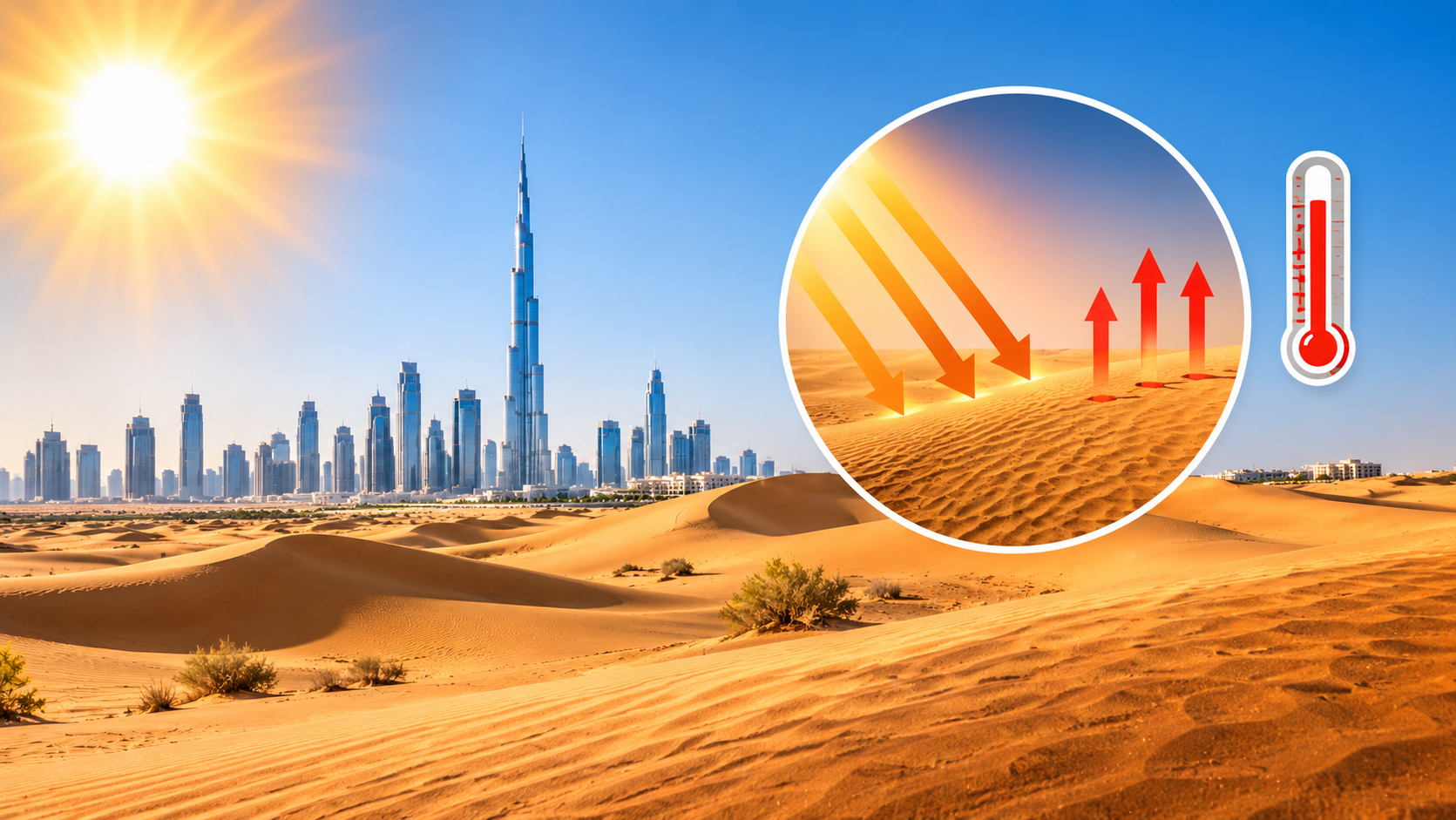
Have you ever wondered why the deserts of the United Arab Emirates become extremely hot during summer? With temperatures sometimes reaching above 45°C, the UAE experiences some of the most challenging summer conditions in the region.
From the golden sand dunes of Dubai to the vast desert landscapes of Abu Dhabi, intense heat is a major characteristic of the country's climate.
But what makes deserts so hot? Is it just because of the sand, or are there other scientific reasons behind these extreme temperatures?
The answer involves sunlight, atmospheric conditions, humidity, and geography. Let's explore the science behind the UAE's hot desert climate.
1. Direct Sunlight Makes the Desert Extremely Hot
One of the biggest reasons behind high desert temperatures is intense solar radiation.
The UAE receives strong sunlight, particularly during summer. When sunlight reaches the Earth's surface, the land absorbs some of this energy and becomes warmer.
The UAE's geographical location also means it experiences high solar exposure throughout much of the year.
During summer, longer daylight hours and a high Sun angle contribute to increased heating.
Science connection: This process is called solar radiation. It explains how energy from the Sun reaches Earth and warms the land, oceans, and atmosphere.
2. Why Does Desert Sand Become So Hot?
Have you ever walked barefoot on hot desert sand? You may have noticed that it feels much hotter than the surrounding air.
This happens because sand can heat up quickly when exposed to direct sunlight.
Sand has relatively low thermal inertia, meaning its temperature can change rapidly compared with materials that store more heat.
During the daytime, the sand absorbs solar energy and becomes hot. After sunset, it can lose heat relatively quickly.
This is one reason why desert temperatures may drop significantly at night, although humidity, cloud cover, and wind can influence how much cooling occurs.
Science connection: Students can understand this concept by studying heat capacity, thermal energy, and heat transfer.
3. Low Rainfall and Dry Air Increase Desert Heat
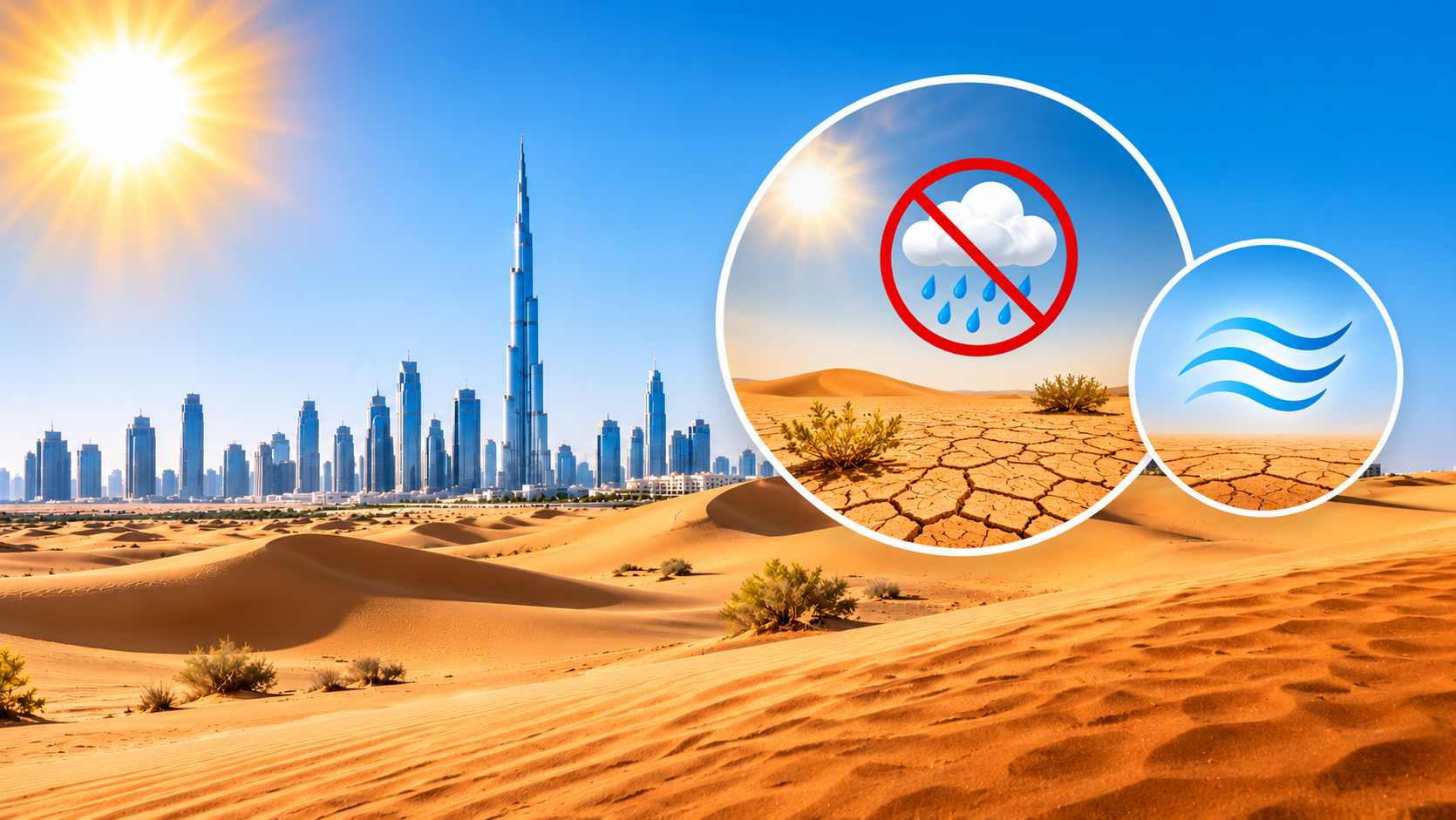
The UAE has an arid desert climate, which means it receives relatively little rainfall.
Unlike regions with frequent rain and abundant vegetation, much of the desert landscape has limited moisture.
Water plays an important role in regulating temperature. When water evaporates, it absorbs energy from its surroundings through a process called evaporative cooling.
In dry desert environments, there is less available moisture for this cooling process.
As a result, more of the incoming solar energy contributes to heating the land and surrounding air.
Science connection: This is an example of evaporation and energy transfer, important topics in Physics and Environmental Science.
4. Why Are Desert Days Hot but Nights Cooler?
One interesting feature of desert climates is the difference between daytime and nighttime temperatures.
During the day, the ground absorbs energy from sunlight and becomes very hot.
At night, the absence of sunlight means the surface no longer receives the same incoming solar energy. Heat escapes from the ground into the atmosphere and space.
Clear skies and low humidity can allow more outgoing infrared radiation to escape, helping the desert cool down.
However, temperatures do not always fall dramatically. Cloud cover, moisture, and local weather conditions can affect nighttime cooling.
Science connection: This phenomenon involves radiation, heat absorption, and heat loss.
5. How Does Humidity Affect UAE Desert Temperatures?
Although deserts are generally dry, some parts of the UAE experience high humidity, especially coastal areas such as Dubai and Abu Dhabi.
Humidity refers to the amount of water vapour present in the air.
High humidity can make hot weather feel even more uncomfortable because sweat evaporates more slowly from the skin.
Since evaporation helps cool the human body, slower evaporation makes it harder to release heat.
This is why a hot and humid day can feel more uncomfortable than a hot and dry day at the same air temperature.
Science connection: Students can explore relative humidity, evaporation, and the human body's temperature regulation.
6. Does Climate Change Make UAE Summers Hotter?
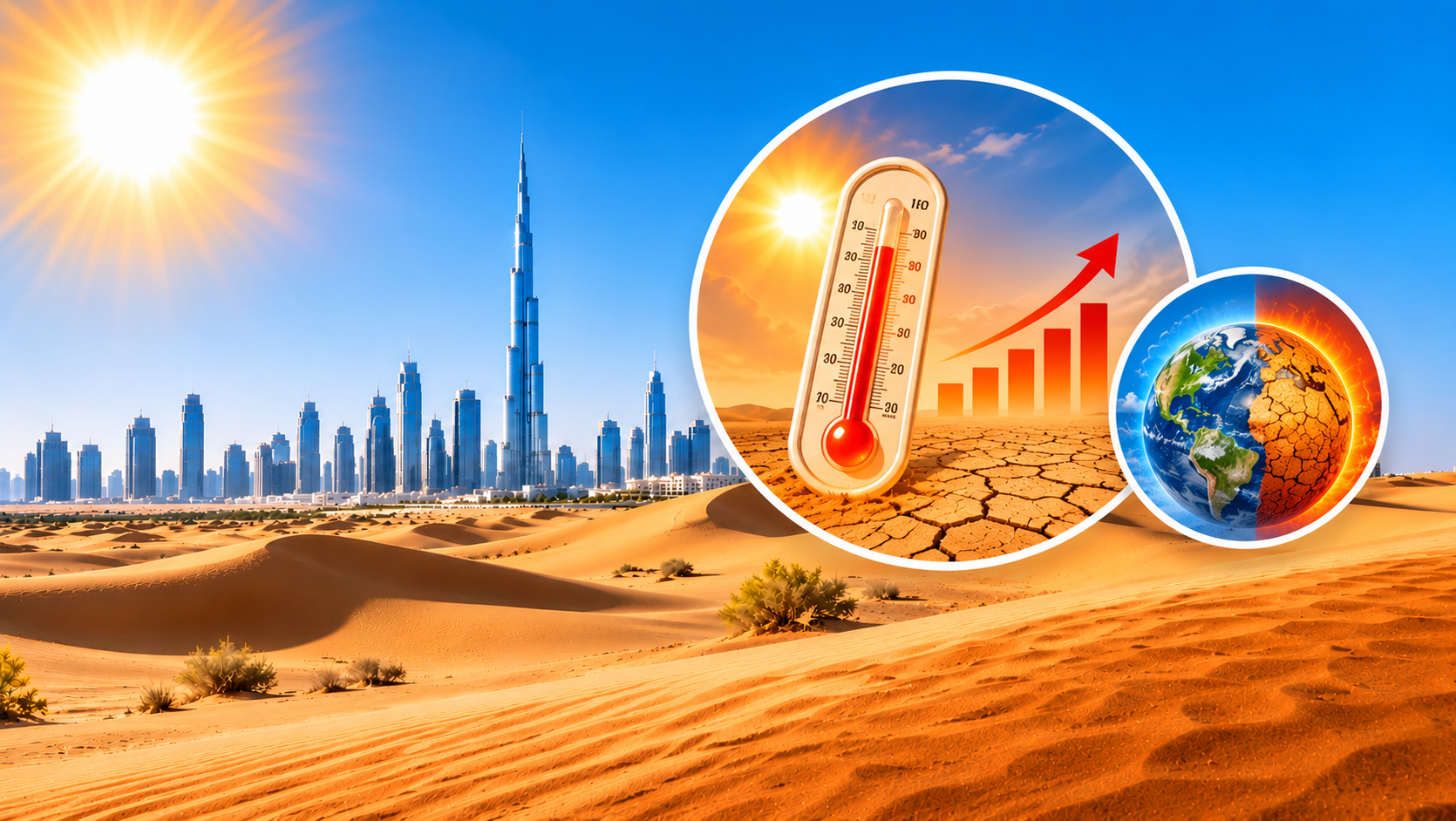
Climate change is an important factor when studying temperatures across the Middle East.
Rising global temperatures are increasing the likelihood of extreme heat in many regions, including the Arabian Peninsula.
Urbanisation can also contribute to higher local temperatures.
Buildings, roads, vehicles, and air-conditioning systems release or retain heat, creating what scientists call the urban heat island effect.
This means heavily developed areas can sometimes remain warmer than nearby natural desert surroundings, particularly at night.
Understanding these changes is important for planning sustainable cities and protecting public health.
7. How Do People Adapt to Extreme Desert Heat?
People living in the UAE use different methods to stay comfortable during extreme summer temperatures.
Some common examples include:
Air conditioning in homes, schools, offices, and shopping centres.
Building insulation to reduce heat entering indoor spaces.
Light-coloured clothing that reflects more sunlight.
Shaded outdoor areas and covered walkways.
Water conservation and careful outdoor activity planning.
Modern architecture and cooling technologies play an important role in making life comfortable in the UAE's desert environment.
What Can Students Learn from the UAE Desert Climate?
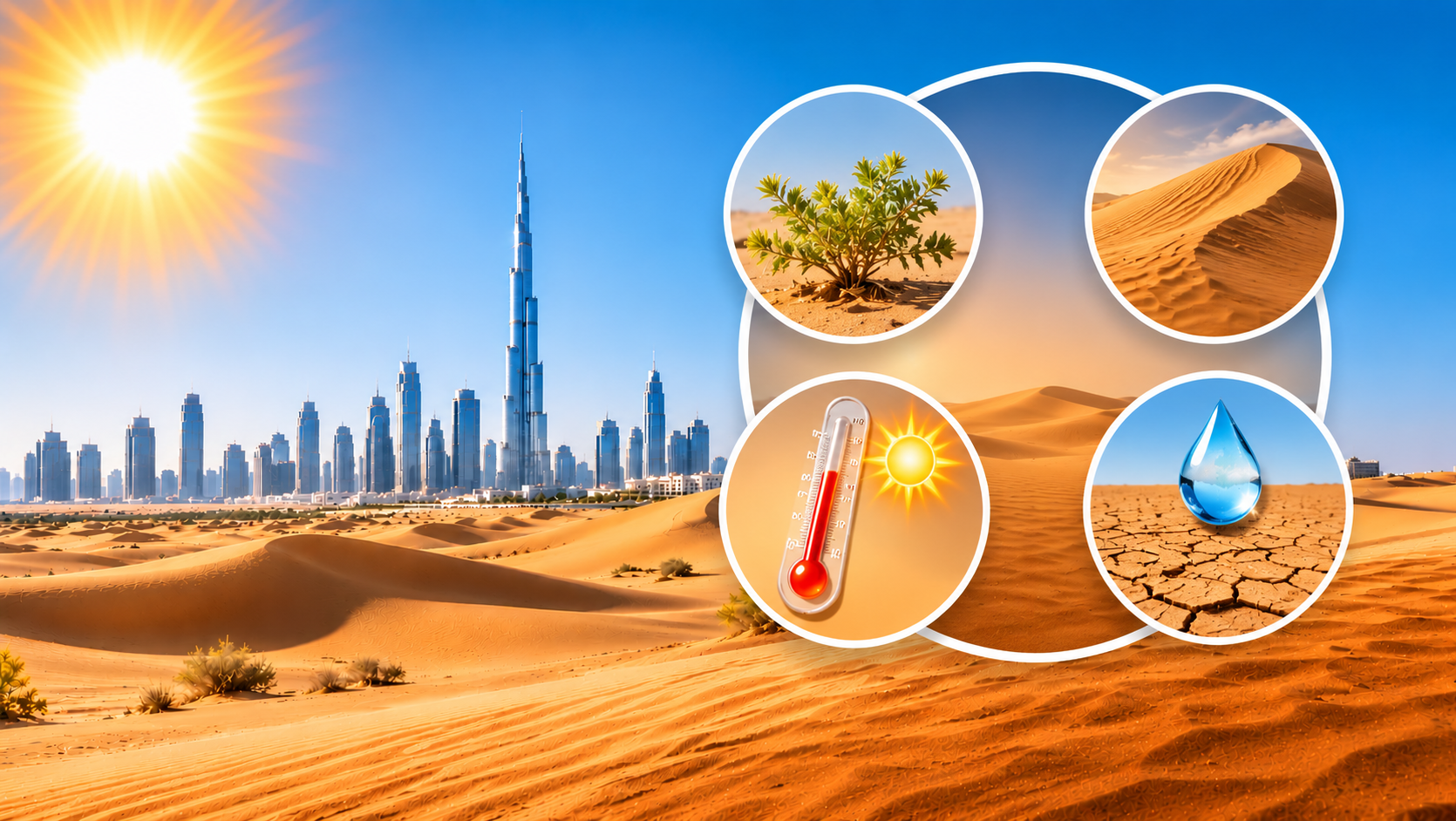
The UAE desert provides excellent real-world examples of important scientific concepts.
Students can explore:
Physics: Solar radiation, heat transfer, evaporation, and thermal energy.
Geography: Desert landscapes, climate patterns, and geographical location.
Chemistry: Water vapour, atmospheric composition, and humidity.
Biology: How humans, plants, and animals adapt to extreme temperatures.
Environmental Science: Climate change, water conservation, and sustainable living.
These examples help students connect classroom learning with the natural world around them.
Learn Science with Siri Education
Understanding the science behind desert climates becomes easier when students connect textbook concepts with real-life examples.
At Siri Education, students receive live, one-on-one online tutoring in Physics, Chemistry, Mathematics, Biology, and Calculus for Grades 6–12.
Whether students want to understand heat transfer, explore climate science, or improve their mathematical problem-solving skills, personalised lessons can help strengthen their academic foundations.
If you are looking for Online Tutoring in United Arab Emirates, Siri Education offers interactive learning and individual academic support to help students learn with confidence.
Final Thoughts
The UAE's extreme desert temperatures are the result of several natural processes working together.
Intense sunlight, low rainfall, dry air, sandy landscapes, and geographical conditions all contribute to the region's hot climate.
By understanding these factors, students can see how Physics, Geography, and Environmental Science explain everyday weather conditions.
The next time you experience a hot summer day in the UAE, remember that there is fascinating science behind every ray of sunshine and every grain of desert sand!