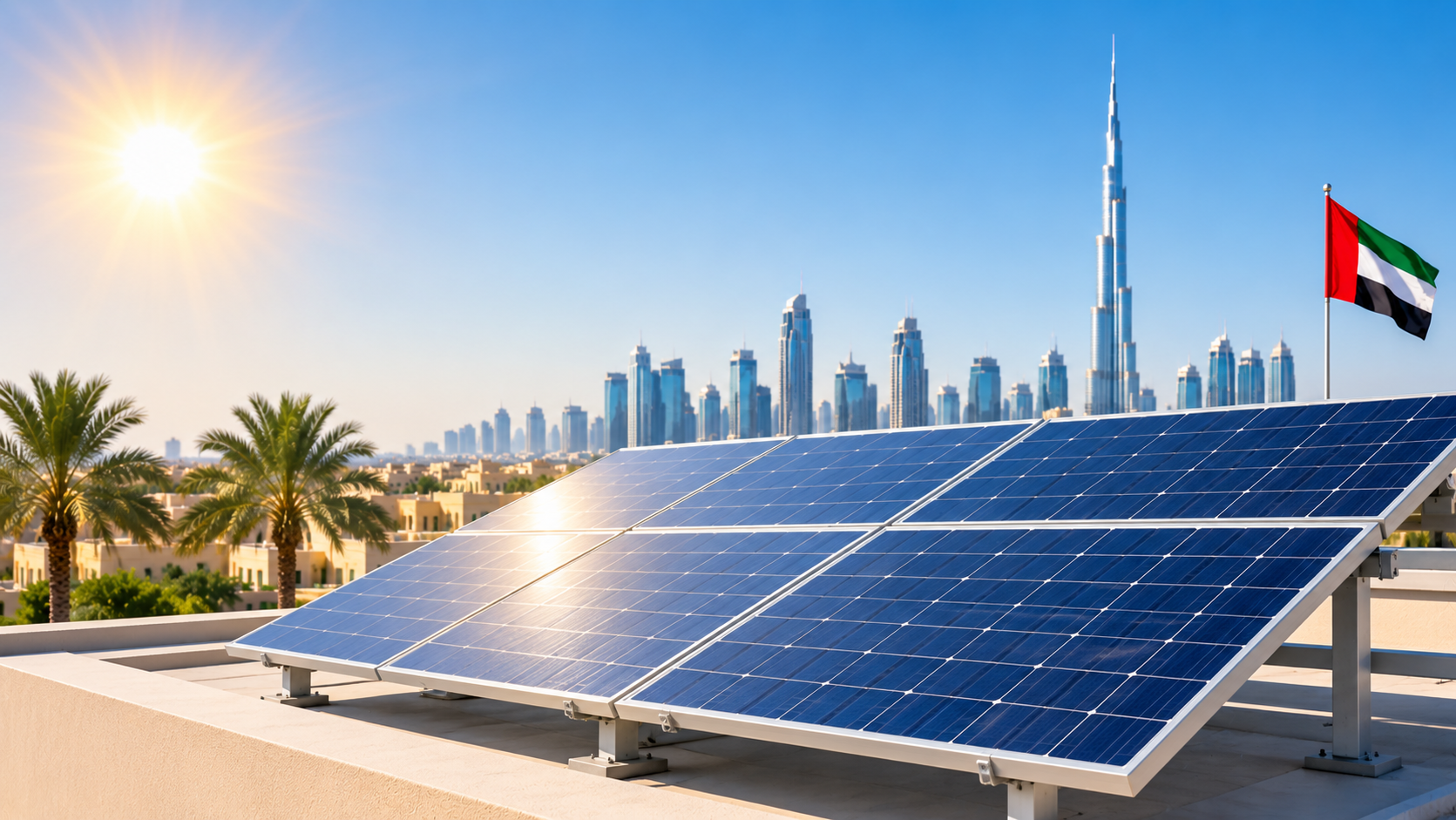
The UAE is known for its bright sunshine, hot summers, and beautiful desert landscapes. But have you ever wondered how all that sunlight can be used to generate electricity?
Instead of allowing sunlight to go unused, the UAE is turning it into a valuable source of clean energy. Solar panels installed across rooftops and large solar parks convert sunlight into electricity that can power homes, schools, offices, and industries.
But how exactly does this process work? And what scientific principles make it possible?
Let's explore the science of solar energy and understand how the UAE is using this renewable resource to support a more sustainable future.
Why Is Solar Energy Important in the UAE?
The UAE receives abundant sunshine throughout the year, making it a suitable location for solar energy projects.
As electricity demand increases, renewable energy sources are becoming increasingly important. Solar power helps diversify the country's energy supply and supports its long-term sustainability goals.
One of the most recognised projects is the Mohammed bin Rashid Al Maktoum Solar Park in Dubai. It is among the world's largest single-site solar parks and plays an important role in Dubai's clean energy ambitions.
Solar energy is also useful for reducing dependence on fossil fuels and lowering greenhouse gas emissions during electricity generation.
How Do Solar Panels Convert Sunlight into Electricity?
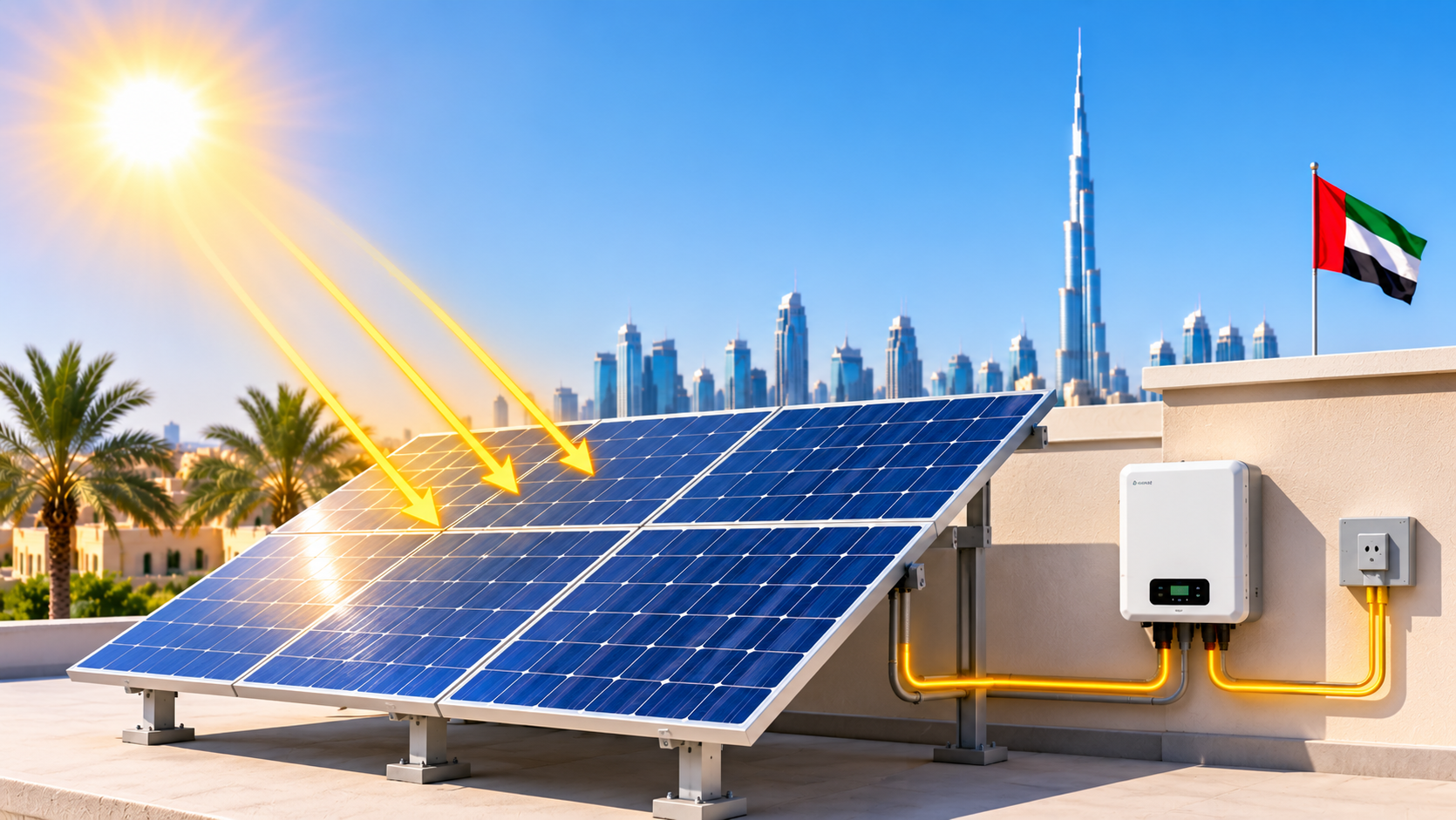
Solar panels work using a scientific process called the photovoltaic effect.
The word photovoltaic combines two ideas: light and electricity. Solar panels contain special materials, usually silicon, that can convert sunlight directly into electrical energy.
Here is how the process works:
1. Sunlight Reaches the Solar Panels
Solar panels are made up of multiple photovoltaic cells.
When sunlight reaches these cells, tiny particles of light called photons transfer energy to the material.
This energy helps electrons become free to move within the semiconductor material.
2. Electrons Start Moving
Solar cells are designed with different layers of semiconductor material that create an internal electric field.
When sunlight provides enough energy, electrons move through the cell and the electric field directs their movement.
This movement of electrons produces an electric current.
3. Electricity Is Generated
The electricity produced by solar panels is called direct current (DC).
However, most household appliances use alternating current (AC).
An important device called an inverter converts DC electricity into AC electricity so it can be used in homes, schools, and commercial buildings.
4. Electricity Is Used or Stored
Once converted, solar electricity can power lights, fans, computers, air conditioners, and other electrical appliances.
If a solar system produces more electricity than is immediately needed, the extra energy may be stored in batteries or exported to the electricity grid, depending on the system and local arrangements.
Why Is Solar Energy Challenging in the UAE Desert?
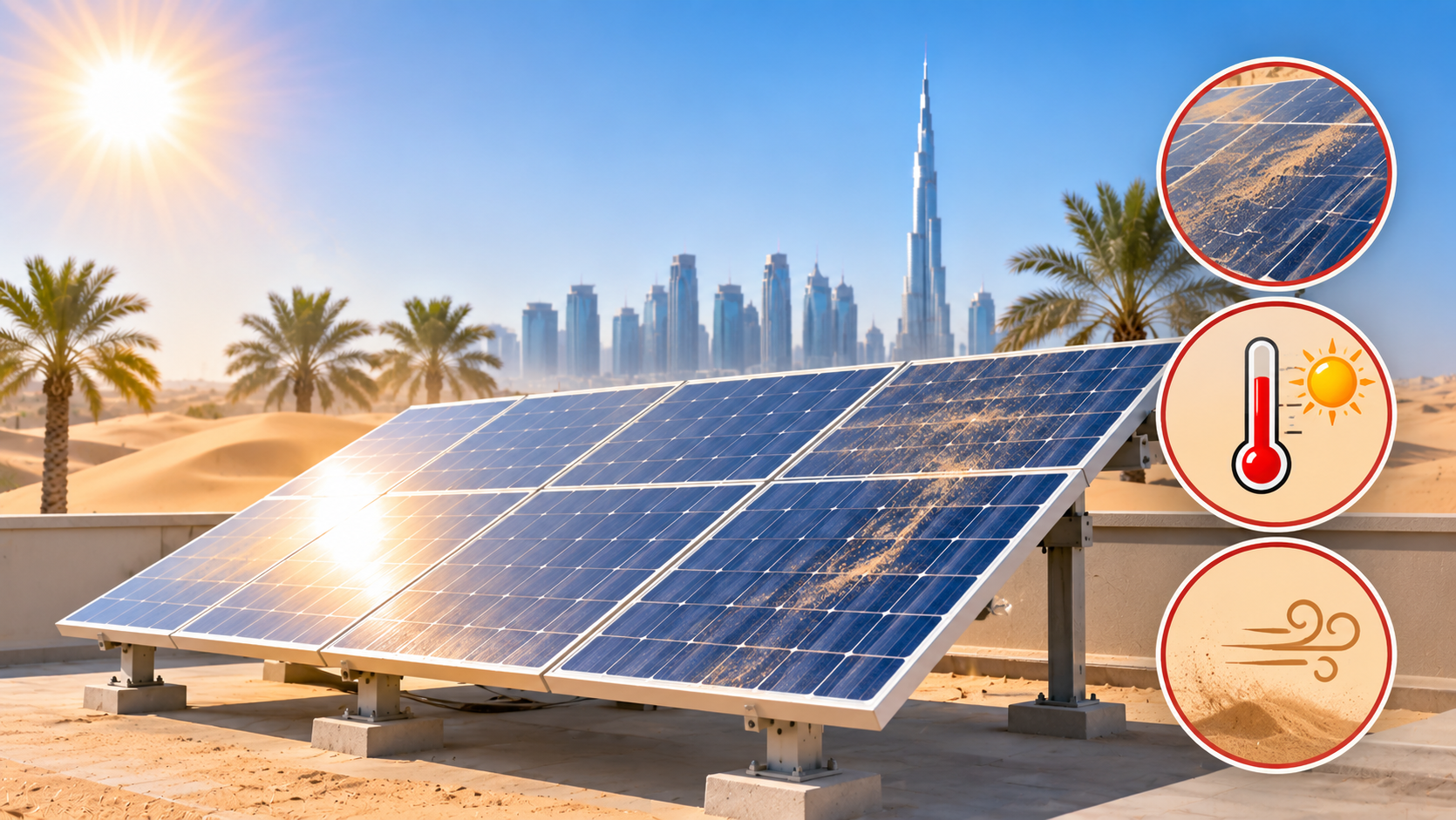
Although the UAE receives plenty of sunshine, installing and maintaining solar panels in desert conditions comes with certain challenges.
High temperatures: Solar panels generally become less efficient as their operating temperature increases. Strong sunlight is helpful, but excessive heat can reduce electrical output.
Dust and sand: Desert dust can collect on panel surfaces and block sunlight, reducing electricity generation.
Humidity: Coastal areas can experience high humidity, which creates additional considerations for equipment protection and maintenance.
Cleaning requirements: Solar panels need regular cleaning to remove dust and maintain their performance.
These challenges can be managed through suitable panel technology, maintenance systems, and careful solar farm planning.
What Are the Different Types of Solar Energy Systems?
Students should also understand that solar energy can be used in different ways.
1. Solar Photovoltaic (PV) Systems
These systems convert sunlight directly into electricity using solar panels. They are commonly installed on rooftops and across large solar farms.
2. Concentrated Solar Power (CSP)
CSP systems use mirrors to concentrate sunlight onto a receiver. The collected heat can produce steam, which drives a turbine to generate electricity.
3. Solar Water Heating
These systems use sunlight to heat water instead of generating electricity. They can be useful in homes, hotels, and other buildings.
Each technology demonstrates a different way of using the Sun's energy.
What Can Students Learn from Solar Energy?
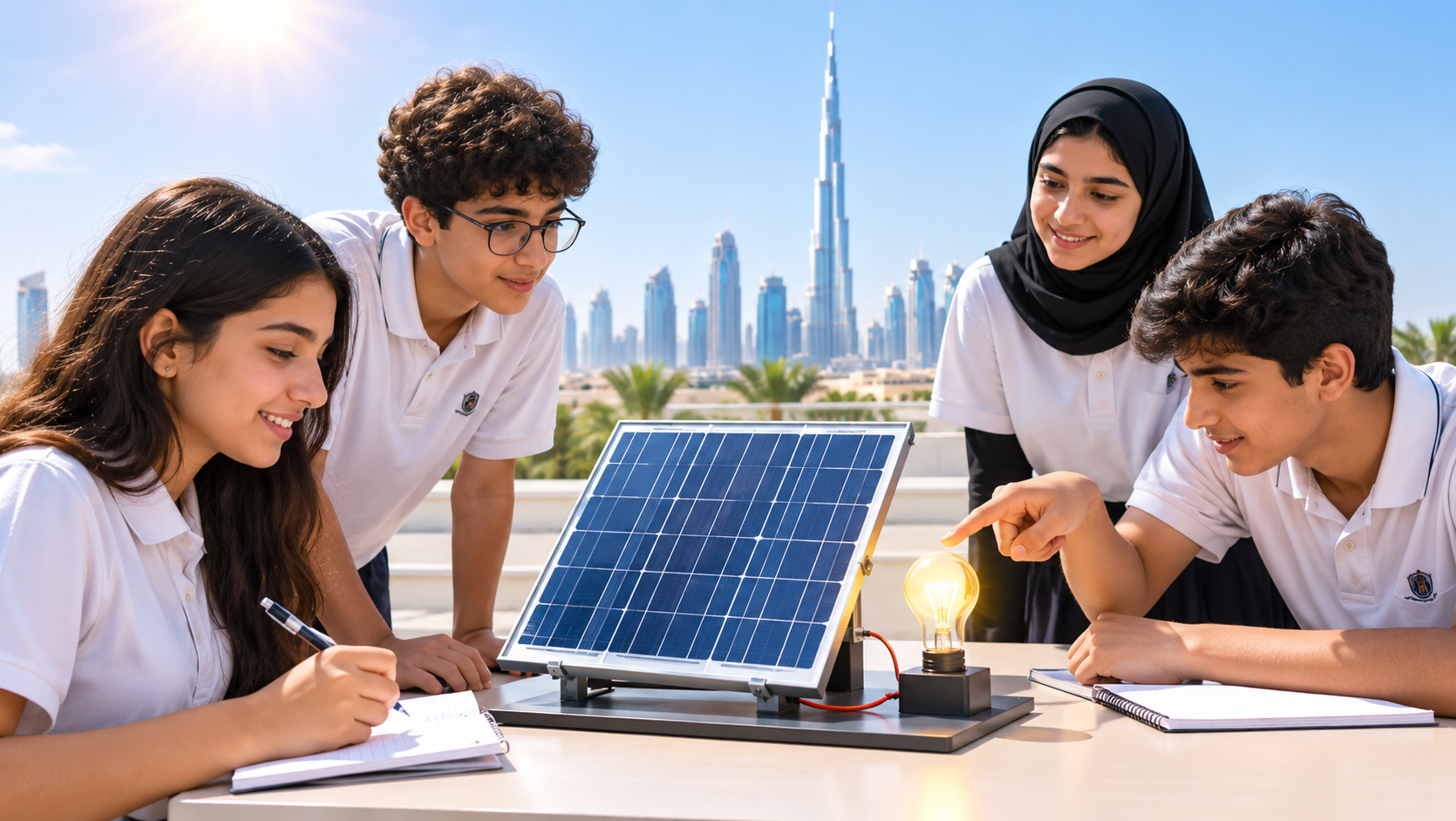
Solar energy is an excellent real-world example of science in action. It helps students connect classroom concepts with technologies they see around them.
Here are some important subjects students can explore:
Physics: Understand electricity, energy conversion, photons, and the photovoltaic effect.
Chemistry: Learn about silicon and semiconductor materials used in solar cells.
Mathematics: Calculate electricity generation, energy consumption, and solar panel efficiency.
Environmental Science: Explore renewable energy, sustainability, and carbon emissions.
These concepts show how different academic subjects work together to solve real-world challenges.
Learn Science with Real-Life Examples at Siri Education
Learning science becomes more interesting when students understand how classroom concepts connect to everyday life.
At Siri Education, students receive personalised, live one-on-one online tutoring in subjects such as Physics, Chemistry, Mathematics, Biology, and Calculus for Grades 6–12.
Students can explore topics such as electricity, energy, thermodynamics, and renewable energy while strengthening their academic understanding.
If you are searching for Online Tutoring in United Arab Emirates, Siri Education provides an opportunity to learn through interactive lessons and individual academic support.
Final Thoughts
Solar energy is more than just a renewable source of electricity. It is an example of how scientific discoveries can help solve real-world problems.
From photons reaching solar cells to electricity powering homes and schools, every stage of the process demonstrates the importance of physics, chemistry, and engineering.
The UAE's investment in solar energy also shows how countries can use natural resources to build a more sustainable future.
The next time you see solar panels on a rooftop or across a desert landscape, remember that sunlight is doing much more than providing light and warmth. It is helping generate the electricity we use every day!